

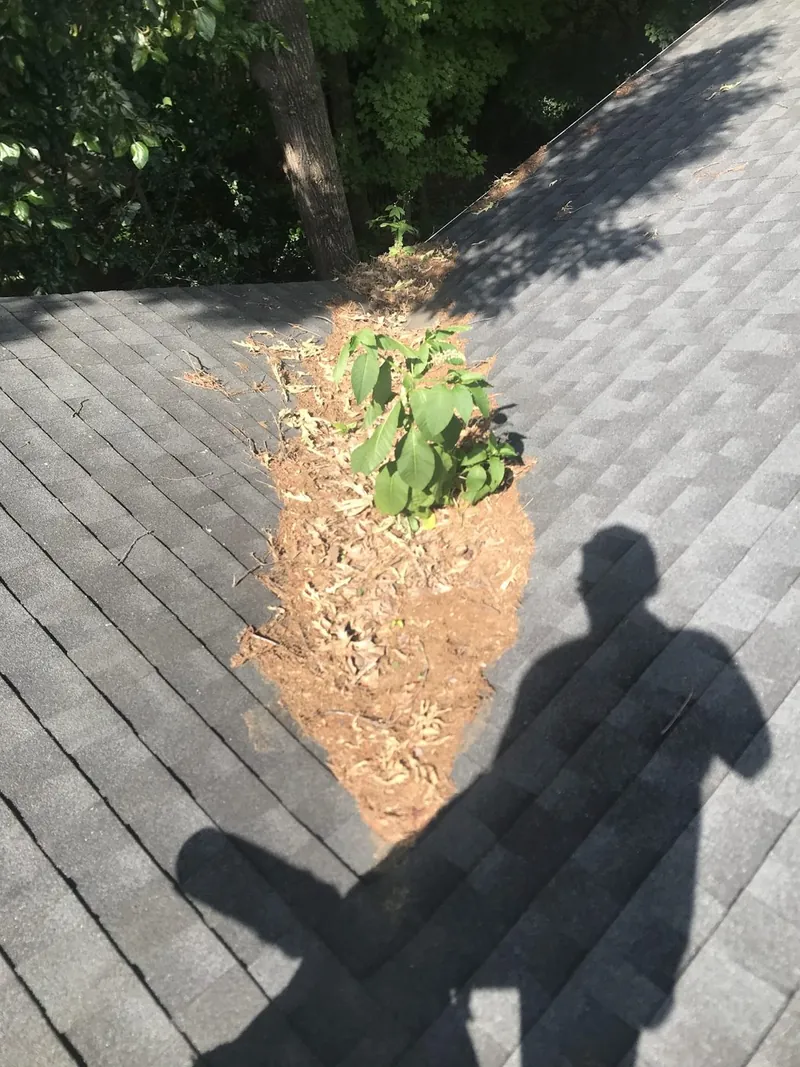
Pine needles on the roof and pine needles in the gutters are related problems, but they can call for different work. Before arranging a visit, explain where the debris is collecting, whether gutter guards are fitted, and what you can see from the ground.
A clear request helps separate roof debris removal, gutter cleaning, and downspout concerns. You do not need to climb onto the roof or decide the cause of an overflow before asking for help.
Raleigh Gutter Cleaning offers roof debris removal, gutter cleaning, and gutter guard services. This guide explains what to record and what to ask when pine straw keeps collecting around your roofline.
Identify the place where needles are collecting
Look from a safe ground-level position. Describe whether the needles are visible on the roof, in an open gutter, on top of a guard, or around a downspout outlet. If you can only see part of the roofline, explain that limitation.
Use a location that another person can identify. “Above the garage doors” or “at the back corner beside the deck” is more useful than “on the left,” which changes depending on where someone is standing. A safe photo can show the area you mean.
Keep the observations separate. A pile on a lower roof and a gutter overflowing at another corner may need different checks. List both instead of assuming the visible pine needles explain every water problem at the property.
Do not reach over an edge, climb a ladder, or walk on a roof to complete the description. The purpose is to give Aaron a starting point for discussing an assessment and the appropriate work.
Roof debris removal and gutter cleaning cover different areas
A request for gutter cleaning should identify the gutters you want discussed. If needles are also collecting on the roof, mention that as a separate part of the request. Do not assume that a cleaning estimate automatically includes every roof surface.
The roof debris removal service is the relevant place to ask about material sitting above the gutter. Explain where it is visible and whether there are roof valleys or lower roof sections you are concerned about. Leave the working method and access assessment to the crew.
For gutter concerns, tell Aaron whether the trough is open or covered. Ask what is included in the proposed work and whether there are separate access requirements for an existing guard system. A short scope discussion can prevent different expectations about the visit.
Removing debris also differs from repairing a roof or changing a gutter system. If you have a leak, visible damage, or a question about the roof itself, state that clearly. Ask what falls within the requested service and what needs another assessment.
Record water behavior only when it is safe to observe
If you have already noticed water overflowing, describe where it happened and the conditions you observed. Say whether it appeared at one point or along a longer section. A photo taken safely from a sheltered ground-level position may help.
You do not need to stand outside in a storm or run water onto the roof to gather evidence. Describe what you have already seen. “I noticed overflow above the rear door during the last rain” is enough to start the conversation.
Overflow does not identify its cause on its own. Debris may be one concern, but the gutter, outlet, downspout, and surrounding arrangement still need checking. Avoid deciding from a photo that a particular component must be replaced.
NC State Extension's gutter-management guidance recommends regular cleaning and inspection and keeping downspouts and elbows free of debris. It also recommends checking after major weather events. The appropriate work for your home still depends on what is found.
Explain whether gutter guards are already installed
Tell Aaron that guards are fitted before requesting the work. If you know the product, keep its name and any documents available. If you do not, a safe photo of a visible section can help begin the discussion.
Ask how the existing system affects inspection and cleaning access. Do not remove a cover or pull at a fastener to obtain a picture. Also ask whether any product-specific instructions need to be considered before work is agreed.
You can describe needles resting on the surface without deciding how well the guard is working. The position of the debris and the water behavior are useful observations. Whether a system needs cleaning, adjustment, or another approach requires its own assessment.
If you are considering new guards, ask about the actual product proposed, its suitability for your roof and debris conditions, and its maintenance requirements. This guide does not rank unnamed products or promise that a guard will eliminate future cleaning.
Include the downspout in the conversation
A gutter request should also explain any downspout concern you have noticed. Mention visible debris at an accessible outlet, a disconnected section, or water appearing somewhere unexpected. Keep your description to what can be seen safely.
If a downspout enters an underground pipe, say so. Ask where the proposed downspout-cleaning service ends and whether a separate drainage assessment is needed. Work on the aboveground system should not be assumed to include every buried pipe.
Do not disconnect a pipe, insert a tool, or attempt a test simply to improve the request. The aim is to identify which parts of the system should be discussed, not to diagnose a blockage yourself.
Keep other water concerns in the same notes without assuming one cause. For example, water near a wall and needles on a roof may both need attention, but a cleaning request should not promise to solve every moisture problem at the home.
Plan checks around what your home actually shows
Keep a note of when debris becomes noticeable and which parts of the property are affected. Photos from the same safe position can help you explain changes over time. You do not need a precise amount of debris or a measured depth to ask for help.
Use those observations to discuss a maintenance plan with Aaron. Explain the surrounding trees, existing guards, roof access, and any recent cleaning records you have. The point is to assess your home's conditions rather than copy a fixed schedule from an unrelated property.
After a major weather event, describe new visible debris or changed water behavior without climbing to inspect it. If you cannot see the relevant roof section, say that it needs checking. A clear limitation is more useful than guessing that it is clean.
Keep completed-work notes with your photos. Record what was agreed and which areas were addressed. That can make a later conversation more precise if debris returns or a separate water concern needs attention.
Ask how cleanup and debris handling will work
Before accepting the scope, discuss what happens to the removed material and which areas are included in cleanup. Ask about the roof debris, gutter debris, and any surrounding surfaces you want considered. Do not assume every estimate uses the same cleanup terms.
For Raleigh properties, the city's yard-waste guidance says to keep leaves and other yard waste out of streets and storm drains. The city explains that this material can clog drainage and harm waterways.
Ask how debris handling will respect the rules that apply at your property. Municipal collection requirements can differ outside Raleigh, so check your own local guidance rather than assuming one city's instructions apply throughout the service area.
Avoid treating a cleaning request as permission to blow debris into a street or drain. A direct question about handling and cleanup helps establish the expected finish of the work before the visit.
Give access details when asking for an estimate
Tell Aaron about gates, pets, parking, and any area that may be difficult to reach. Mention a rear addition, enclosed courtyard, or other feature that helps explain the layout. A wide ground-level photo can be useful when words are unclear.
Explain whether someone needs to arrange entry or whether building-management procedures apply. Share private access instructions directly with the business, not in a public review or comment. Confirm the practical arrangements before the appointment.
Ask what you should prepare and what the crew needs to assess. Do not assume that moving furniture, unlocking a neighbor's gate, or using another property's access route is already agreed. If permission is needed, discuss it before making a promise on someone else's behalf.
You can state a preferred visit time, but ask for confirmation of availability. Sending photos or requesting an estimate does not itself establish an appointment or the final price.
A pine-needle request checklist
Use this list to organize a short message. You can explain what you know and leave anything else as a question for the assessment.
- Give the property location directly to the business.
- Identify visible roof debris separately from debris in the gutters.
- Describe the affected area using a clear feature of the home.
- State whether gutter guards are fitted and include the product name if known.
- Mention any overflow or downspout concern you have already observed.
- Attach safe ground-level photos if available.
- Explain access restrictions, gates, pets, and parking arrangements.
- Ask which roof, gutter, downspout, and cleanup work the estimate covers.
- Confirm availability and any preparation before treating the visit as booked.
Avoid a long diagnosis copied from a product review or search result. Aaron needs the conditions at your own home, including any part you cannot see safely.
Questions about pine straw and gutter work
Should I request roof debris removal or gutter cleaning?
Describe both areas if you are unsure. Needles visible on the roof and material inside the gutter are different parts of the request. Ask for the proposed scope to identify which areas will be addressed rather than choosing a service name that might omit part of the concern.
Does having guards mean I should leave them out of the request?
No. Explain that they are fitted and describe any visible buildup or water behavior. Ask how the actual system should be assessed and maintained. Do not remove parts before the conversation or assume a cleaning method from another guard product applies.
Can cleaning tell me whether my roof needs repair?
Ask about the limits of the service. Debris removal and roof repair are different work, and a clean surface alone does not establish the condition of the roof. If you have a leak or damage concern, explain it separately and ask who should assess it.
What if overflow continues after debris is removed?
Keep a record of what you see and contact the relevant service provider. The system may need further assessment. Do not assume that repeating cleaning will address a different gutter, downspout, or drainage issue that has not been identified.
Arrange the right work for your roofline
Raleigh Gutter Cleaning's service areas list its current coverage. Tell Aaron the property location and whether the request involves the roof, gutters, guards, or downspouts so the work can be discussed clearly.
Request an estimate or call (919) 432-5314. If you are still working out what you are seeing, the guide to signs your gutters need attention can help you organize your observations from the ground.